

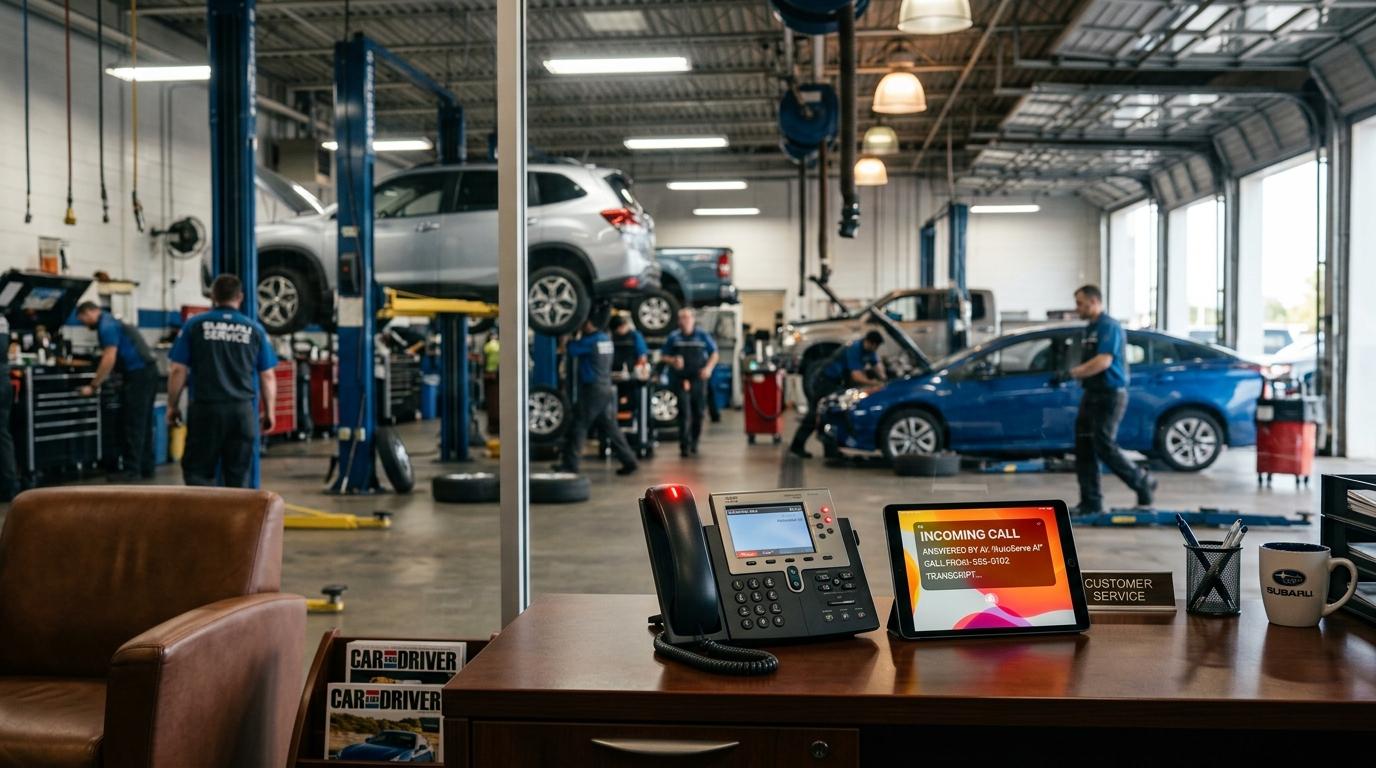

Most conversations about AI and dealerships go straight to sales. Leads, test drives, BDC follow-ups, that kind of thing. Makes sense, that's where the deals happen. But there's this whole other phone problem sitting right next door that barely gets talked about. The service department. And honestly, it might be even worse than the sales side when it comes to missed calls.
The Service Department Phone Is A Different Animal
Sales calls and service calls aren't the same thing, not even close. Someone is calling about a car they saw online. They're researching, they're comparing, sure, they want a quick response, but if they wait an hour, it's not the end of the world for them necessarily. Someone calling the service department, though? Their car is doing something weird. There's a warning light on. Their AC stopped working in July. They need an oil change before a road trip this weekend, and it's already Thursday. These calls have a clock on them in a way that sales calls usually don't. And yet, service departments are often staffed even thinner than sales when it comes to phone coverage. Advisors are out on the drive talking to customers who are physically standing there. Techs are in the bay. The one or two people who could theoretically answer the phone are usually doing five other things at once.
What Actually Happens When These Calls Get Missed
Picture a Monday morning. Everyone's car troubles from the weekend are hitting at once. The phone is just going nonstop. A customer calls about a strange noise their car started making on a road trip. Nobody picks up. They call your competitor down the street, who happens to answer, and now that's where the appointment goes. Not because your shop isn't good, just because someone else answered first. Another call comes in from someone whose recall notice arrived in the mail, and they want to know if their car needs to come in. That call goes to voicemail too. Maybe they call back later, maybe they just forget about it for a few weeks until it becomes a bigger deal. A third call is from someone who already has an appointment but needs to push it back a day. That one's simple, but if it doesn't get handled, you've got either a no-show or a service advisor doing a last-minute schedule shuffle that throws off everyone else's day too. None of these is dramatic on its own. But add them up across a week, a month, and you're looking at a service department that's running below capacity, not because there isn't enough demand, but because the demand couldn't get through.
The Revenue Side Nobody Really Talks About
Service departments are often one of the most consistent profit centers at a dealership. More consistent than sales in a lot of ways, because people need oil changes and brake jobs regardless of what's happening with car prices or interest rates. Which makes it kind of strange that the phone handling for service is usually an afterthought. If sales misses a call, everyone notices because it's tied to a big visible number, a car sale. If service misses a call, it just quietly doesn't show up as an appointment that day, and nobody connects the dots. But do the math on it. If a service department is missing even a handful of calls a day that would've turned into appointments, and each of those appointments is worth a few hundred dollars in labor and parts, that adds up to a lot of revenue that just never makes it onto the books. Not because the work wasn't needed. Just because the phone didn't get answered.
Why A Dedicated Agent Matters Here Specifically
This is where it gets interesting. Service departments have their own language, their own scheduling logic, their own way of triaging what's urgent versus what can wait a week. A generic phone system, or even a general AI receptionist that's trying to cover the whole dealership, might not handle service calls the way they actually need to be handled. Service has its own rhythm. Appointment lengths vary a lot depending on what's being done. Some things need a loaner car arranged. Some things are warranty-related and need specific info captured upfront. AI Receptionist for Small Businesses type solutions are great for a lot of operations, answering the phone, book the appointment, take a message. But a dealership's service department benefits from something that's specifically tuned to how service works. Knowing the difference between someone calling for a routine oil change versus someone describing a symptom that sounds like it needs to be looked at today. Knowing which advisor handles what. Knowing how your shop schedules diagnostic time versus a quick maintenance item. When the AI phone agent is built around that kind of nuance, it's not just answering the phone; it's actually doing triage the way a good service advisor would, except it's doing it instantly and it never gets pulled away to deal with the customer standing at the counter.
How This Connects Back To The Whole Dealership
Here's something people don't always think about. Service customers are some of the best sales leads a dealership has, and most of that connection happens, or doesn't happen, over the phone. Someone who's been bringing their car in for service for three years and just mentioned on a call that they're thinking about trading it in soon? That's a lead. But only if someone catches it. If that call gets handled well, that mention gets noted and passed along. If the call barely gets answered because everyone's busy, that little comment just disappears into the day. A AI BDC Agent for Car Dealerships that's aware of both sides, service and sales, can actually catch stuff like this. The service call happens, the system notes that the customer mentioned wanting to look at newer models, and that gets flagged for the sales side to follow up. That's a connection that mostly doesn't happen right now because the two departments are basically running on separate islands when it comes to phone handling, and both islands are already underwater on calls.
What Good Coverage Actually Looks Like Day To Day
Let's go back to that busy Monday morning. The noise complaint call gets answered immediately. The system asks a few questions. The noise sounds like it could be something that shouldn't wait, so it gets flagged as higher priority, and an advisor gets a heads-up before they even call the customer back. Maybe the appointment gets booked for that afternoon instead of next week. The recall question gets answered too. The system can check if there's an open recall tied to that vehicle and let the customer know, and if there is, it gets that appointment on the books right then instead of leaving it as a maybe for later. The reschedule request gets handled in under a minute. No advisor needs to stop what they're doing, the calendar just gets updated and a confirmation goes out. By lunchtime, the schedule for the next few days looks fuller than it would have, not because more people called than usual, but because more of the people who called actually got through and got something booked.
The Bigger Shift This Represents
For a long time, the assumption at dealerships has been that service departments just run a little behind on phones, and that's sort of normal, sort of expected. Everyone's busy; that's how it goes. But "that's how it goes" is exactly the kind of thing that's worth questioning once there's actually a way to fix it without throwing more staff at the problem. Hiring another person for the service desk is expensive, and they still can only be in one place at a time, can still only handle one call at a time, still need breaks, and still call in sick. An AI phone agent built around how service departments actually operate doesn't have any of those limits. It's not replacing the advisors; it's just making sure the phone stops being the bottleneck it's quietly been for years. Sales gets a lot of attention when it comes to dealership phone systems, and that attention is fair, those calls matter a lot. But service is sitting right there with its own pile of missed calls, missed appointments, and missed connections back to sales, and it's been mostly ignored because nobody's been counting what it's actually costing. Once you do count it, the case for giving service its own dedicated phone coverage gets pretty obvious pretty fast.


