

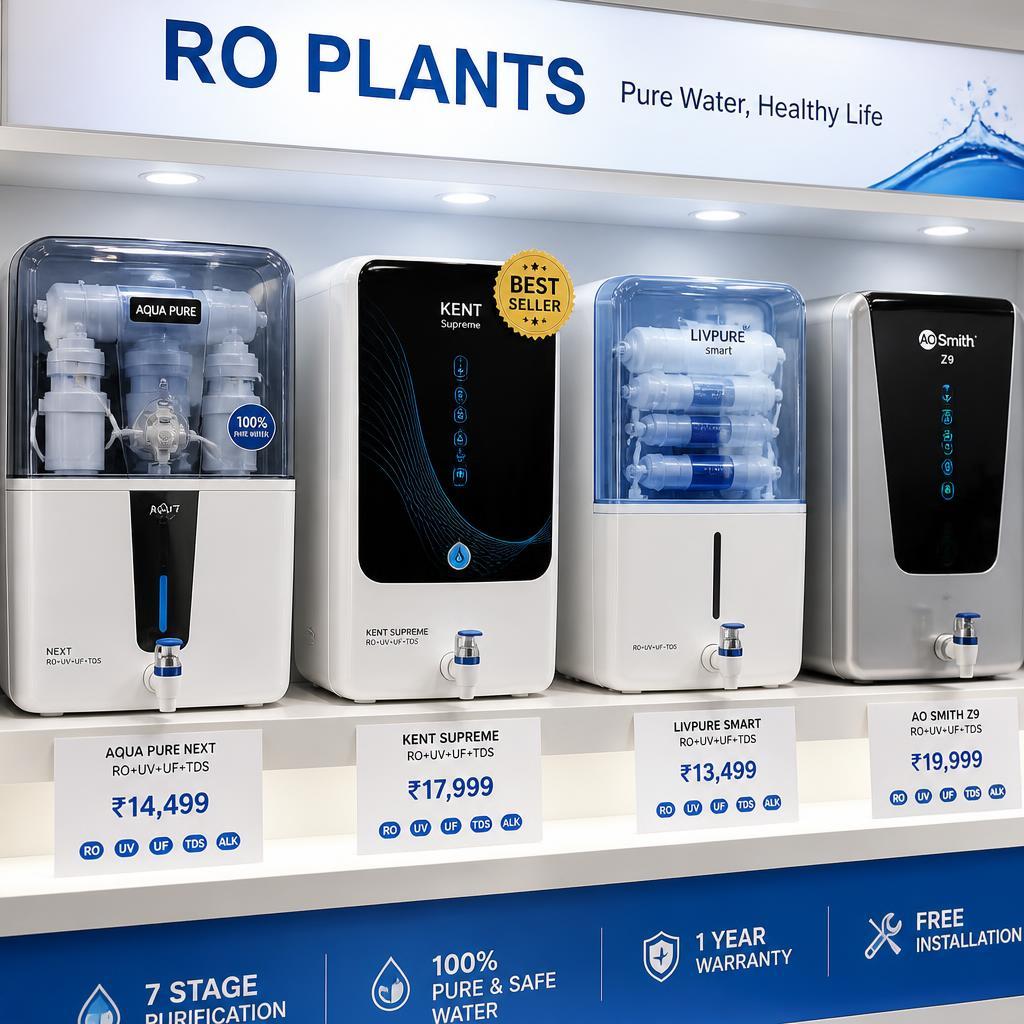

Water coming out of your tap may look clean, but looks are deeply misleading when it comes to contamination. Dissolved heavy metals, bacterial colonies, chlorine byproducts, and agricultural chemicals are invisible yet dangerously present in Pakistan's water supply across most regions. A professionally installed RO Plant Water Filter addresses precisely this problem — targeting contaminants at the microscopic level that ordinary filters simply cannot reach. The Next Rex has brought structured, reliable, and technically sound RO Plant Water Filter services to Pakistan, making safe drinking water accessible not just as a product but as a long-term managed solution. This guide walks you through everything you genuinely need to understand — from how the technology works to what factors drive cost and performance. Fix Your Water Today
The Hidden Water Quality Problem Most Pakistani Households Overlook
Pakistan ranks among the countries with the most severe drinking water quality challenges globally. Studies from health ministries and independent research institutions consistently show that a significant portion of both urban and rural groundwater carries contamination levels that exceed WHO-recommended safety thresholds.
Arsenic is perhaps the most alarming contaminant. Punjab's southern districts and Sindh's rural belt have documented arsenic concentrations in groundwater that cause chronic poisoning through years of daily exposure. Beyond arsenic, fluoride, nitrates, lead from aging pipes, and biological pathogens like E. coli and typhoid-causing Salmonella typhi are widespread problems.
Boiling water addresses biological threats to some degree, but it does nothing for dissolved salts, heavy metals, or chemical contamination. This is the gap that a well-engineered water filter plant is designed to fill — providing purification that goes several stages deeper than heat alone can achieve.
How Reverse Osmosis Technology Actually Purifies Water
Reverse osmosis works on a principle that is elegant in its simplicity but remarkable in its results. Water is subjected to pressure that forces it through a semi-permeable membrane with pores small enough to block dissolved salts, heavy metals, and microorganisms while allowing pure water molecules to pass through.
The process begins well before the RO membrane itself comes into play. A quality filtration plant configuration starts with sediment pre-filtration to remove suspended particles. This is followed by activated carbon treatment to strip chlorine and organic compounds that would otherwise degrade the membrane surface over time.
After the core membrane stage — where up to 99% of total dissolved solids are removed — a post-filtration stage often adds back trace minerals like calcium and magnesium, improving taste and ensuring the water is not aggressively demineralized. Some configurations also include a UV sterilization stage as a final safeguard against any remaining biological content.
The RO Plant Water Filter systems deployed by The Next Rex follow this multi-stage architecture, with component selection tailored to the specific contaminant profile of the client's water source rather than applying a generic configuration to every installation.
Domestic vs. Commercial RO Plant Water Filter: Understanding the Difference
The fundamental technology behind residential and commercial systems is the same. However, the scale, flow rate, pressure requirements, and membrane configurations differ significantly between a water filter for home and a system designed to serve a restaurant, school, clinic, or factory.
A domestic unit typically produces between 50 and 200 gallons per day — adequate for a household of four to six people for drinking and cooking purposes. These systems are compact, often mounted under the kitchen sink, and connect directly to the existing plumbing line. Maintenance involves periodic filter cartridge replacement and occasional membrane inspection.
Commercial systems operate at much higher flow rates, often using multiple membrane housings running in parallel. They require dedicated pressure pumps, larger pre-filtration assemblies, and more sophisticated monitoring for pressure drop and output quality. Industrial setups — serving factories, townships, or hospitals — involve custom engineering based on raw water analysis, daily volume requirements, and regulatory compliance standards.
Understanding which category your requirement falls into is the first step before making any purchasing decision. The Next Rex assists clients at this exact stage — conducting a needs assessment before recommending capacity, configuration, and installation approach.
RO Water Plant Services: What Professionals Bring That DIY Cannot
The market in Pakistan is flooded with low-cost RO units available through e-commerce platforms and local hardware stores. Many buyers purchase these systems expecting immediate results, only to find that water quality remains poor, the membrane fails prematurely, or the system produces unacceptably low output pressure.
These failures are almost never about the technology itself — they stem from incorrect installation, mismatched membrane selection for local water conditions, or inadequate pre-filtration that allows particulate matter to degrade the membrane within months. A proper RO Water Plant service includes source water testing, proper pre-filter sizing, correct pressure pump selection, and post-installation output verification.
Professional service also includes commissioning — the process of running the system through its initial flush cycles, verifying TDS reduction across each stage, checking for leaks, and confirming that all connections meet pressure tolerance standards. Skipping this step is one of the most common causes of early system failure in self-installed units.
RO Water Plant Price in Pakistan: A Realistic Cost Breakdown
Cost is understandably among the top concerns for buyers across Pakistan. The RO Water Plant price in Pakistan spans a wide range, from basic residential units starting at roughly PKR 15,000 to large commercial assemblies that can reach several hundred thousand rupees depending on capacity and specification.
For home use, a reliable five-stage RO system from a reputable brand with professional installation typically costs between PKR 25,000 and PKR 60,000. This range accounts for membrane quality, housing durability, pressure pump inclusion, and tank capacity. Cheaper options exist, but they frequently compromise on membrane rejection rates or use substandard housing materials that crack under sustained water pressure.
Mid-range commercial systems for restaurants or small offices generally fall between PKR 70,000 and PKR 150,000. Industrial-grade plants require individual assessment and quotation, as capacity, pre-treatment needs, and output specifications vary enormously by application.
It is worth noting that the cost of a properly maintained system over five years is significantly lower than the cumulative cost of bottled water for a family — making a quality water filtration plant for home use one of the soundest household investments available in Pakistan today.
Selecting the Right Drinking Water RO Plant for Your Location
Water quality varies considerably across Pakistan's cities and regions. Karachi's desalinated municipal supply behaves differently from Lahore's canal-fed distribution system, and both are vastly different from the high-arsenic groundwater in parts of southern Punjab or the fluoride-heavy wells in certain Balochistan districts.
Selecting the right drinking water RO plant for your specific location means accounting for local TDS levels, dominant contaminant types, water hardness, pH, and seasonal variation in source water quality. A TDS meter can give you a quick reading, but a comprehensive water test from a certified laboratory provides the full picture needed for proper system configuration.
The Next Rex approaches each client engagement with this location-specific mindset. Rather than offering a catalogue of fixed packages, their technical team maps the client's actual water conditions to system specifications — ensuring the membrane type, pre-filter media, and output configuration are all aligned with what the water actually contains. This level of customization is what separates a genuinely effective installation from a generic retail purchase.
The Next Rex Advantage: Technology-Driven Water Solutions
The Next Rex (Pvt) Ltd. was built on the principle that technology should solve real problems with measurable results. As a subscription-based service provider in Pakistan, the company is backed by AWS and GCP cloud infrastructure — giving their digital operations the speed, security, and reliability that enterprise clients demand. They run two respected industry blogs and provide high-quality SEO-optimized content across IT, marketing, digital technology, and business management.
That same engineering discipline and client-first approach now extends to their water treatment services. The Next Rex treats every water filter installation as a managed service — not a one-time sale. Their economical management system ensures that maintenance scheduling, filter replacement reminders, and performance monitoring are all handled with the same precision applied to their digital service contracts.
For clients who want clean water without the burden of managing it themselves, The Next Rex offers a genuinely differentiated experience in Pakistan's often fragmented water treatment market.
Maintenance Realities: Keeping Your RO Plant Water Filter Performing
Even the best-engineered system degrades without proper upkeep. Sediment and carbon pre-filters need replacement every three to six months, depending on source water turbidity. The RO membrane itself typically lasts one to three years, though high-TDS water conditions in parts of Pakistan can shorten this to twelve months or less.
Storage tanks should be sanitized annually to prevent biofilm formation. UV lamps, where included, have a rated lifespan of approximately twelve months regardless of how many hours they have operated — because output intensity diminishes over time even before complete failure.
Tracking these intervals manually is easy to neglect. The Next Rex addresses this through structured service reminders built into their client management system, ensuring that no component is overlooked until it has already compromised output quality. Start Clean Water Journey
Frequently Asked Questions
1. How do I know if my current water filter is actually removing contaminants?
Testing your filtered water with a TDS meter and a certified laboratory kit is the most reliable way to verify actual filtration performance.
2. Can an RO Plant Water Filter handle borehole water in Pakistan?
Yes, but borehole water typically requires additional pre-filtration stages for iron and sediment removal before the RO membrane stage.
3. Is it safe to drink RO-purified water daily without mineral supplements?
A properly configured post-mineral filter restores essential minerals, making daily consumption of RO water safe and balanced for long-term health.
4. What is the average daily water output of a domestic RO system in Pakistan?
Most residential units produce between 50 and 200 gallons per day, which is sufficient for a standard household's drinking and cooking needs.
5. How does water pressure affect the performance of an RO Plant Water Filter?
Low inlet pressure reduces filtration efficiency and output volume, which is why a booster pump is recommended in areas with inconsistent municipal supply.


