

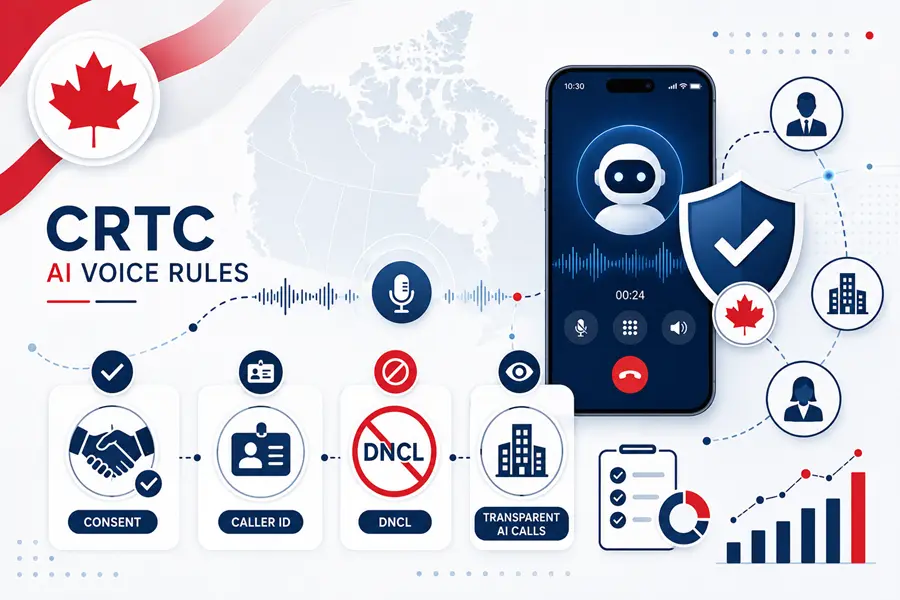

AI voice technology is becoming a practical tool for Canadian businesses. From AI receptionists and automated appointment reminders to lead follow-ups and customer support calls, voice automation can help companies save time, reduce missed calls, and improve communication. However, businesses must understand the compliance side before using these systems.
The CRTC AI voice rules are important for any company using AI voice agents, automated calling, robocalls, or voice-based customer communication in Canada. These rules are connected to telemarketing, the National Do Not Call List, caller identification, consent, and automatic dialing systems.
For Canadian businesses, AI voice tools can be useful, but they must be used responsibly. This guide explains what business owners should know before using AI voice technology.
What Are CRTC AI Voice Rules?
The term CRTC AI voice rules refers to the Canadian telecommunications rules that may apply when businesses use AI voice systems to contact people by phone. These rules are not only about artificial intelligence itself. They are mainly about how businesses make calls, collect consent, identify themselves, and respect consumer preferences.
The Canadian Radio-television and Telecommunications Commission, known as the CRTC, regulates unsolicited telecommunications in Canada. This includes rules around telemarketing, the National Do Not Call List, and automatic dialing-announcing devices, often called ADADs.
If a business uses an AI voice agent to make calls, deliver automated messages, or handle outbound communication, it may need to follow these requirements. Using AI does not remove responsibility from the business. The company using the system is still accountable for how the calls are made.
Why Canadian Businesses Should Care
AI voice systems make calling easier and faster. A business can contact many customers, answer routine questions, or manage bookings without needing a large phone team. This is helpful for clinics, dental offices, real estate companies, home service providers, agencies, and professional firms.
However, automation also increases risk. If a business calls people without permission, hides who is calling, ignores opt-out requests, or uses misleading caller ID, it may create complaints and compliance problems.
The CRTC AI voice rules help protect Canadians from unwanted and unclear calls. For businesses, following these rules is not only about avoiding penalties. It is also about building trust. Customers are more likely to accept AI voice communication when it is clear, useful, and respectful.
Consent Comes First
Consent is one of the most important parts of AI voice compliance. A business should not assume that having a customer’s phone number gives permission to make any type of call.
For example, a customer may provide a phone number to book an appointment. That may support appointment-related communication, but it does not automatically mean the customer agreed to receive promotional AI voice calls. Businesses should clearly explain what type of calls a person may receive.
When using AI voice technology, consent should be easy to understand. The customer should know who may contact them, why they may be called, and how they can stop future calls.
Businesses should also keep consent records. These records may include the date consent was collected, the form or page used, the wording shown to the customer, and the type of communication approved. Good documentation can help if a complaint is made later.
Understand the National Do Not Call List
The National Do Not Call List, also known as the DNCL, allows Canadians to reduce unwanted telemarketing calls. Businesses making telemarketing calls may need to register, subscribe, and check numbers before calling.
The CRTC AI voice rules do not allow companies to ignore the DNCL simply because they are using AI. If an AI voice system is used for telemarketing, the business should make sure the calling list is properly reviewed.
Businesses should also maintain an internal do not call list. If a person asks not to receive calls, that request should be recorded and respected. This applies whether the request is made to a human employee or through an AI voice agent.
A good AI voice setup should include opt-out handling. The system should recognize when a person wants to stop receiving calls and make sure that request is passed to the business.
Caller Identification Must Be Clear
When a business calls someone, the recipient should understand who is contacting them. Clear identification is a key part of responsible calling.
AI voice agents can sound natural and human-like. Because of this, businesses should avoid making calls that feel deceptive. If the call is automated or AI-assisted, the message should be clear and professional. The business name should be stated early, and the purpose of the call should be easy to understand.
If a third-party provider is calling on behalf of a business, the relationship should not be hidden. The recipient should know which company is responsible for the call and how to contact that company.
Following the CRTC AI voice rules means businesses should focus on transparency, not tricks.
Caller ID Should Not Be Misleading
Caller ID is another area businesses should handle carefully. Some companies use local-looking numbers or rotating numbers to improve answer rates. While using a valid local number may not always be a problem, caller ID should never mislead people.
A person receiving the call should be able to identify or contact the business. If someone calls back, the number should connect to a valid business line or provide clear information. Misleading caller ID can make even a legitimate business look suspicious.
For AI voice campaigns, accurate caller ID is especially important because people are already cautious about automated calls and scams.
Inbound AI Voice Agents vs Outbound AI Calls
Not all AI voice use cases carry the same level of risk. Inbound AI voice agents usually answer calls that customers make to the business. For example, an AI receptionist may answer after-hours calls, collect basic details, or help route inquiries.
Inbound use is generally less sensitive because the customer is initiating the call. Still, businesses should make the experience transparent and helpful. Callers should be able to reach a human when needed.
Outbound AI calls require more caution. These calls may include lead follow-ups, promotional offers, surveys, reminders, or customer updates. If the call is promotional or solicitation-based, consent and DNCL rules become especially important.
A Canadian business should clearly separate service-related calls from marketing calls. A reminder about an existing appointment is different from a promotional call offering a new service.
How Different Businesses Can Use AI Voice Responsibly
Many Canadian businesses can benefit from AI voice agents when they use them correctly.
Healthcare and dental clinics can use AI voice tools for appointment confirmations, missed call handling, and basic routing. They should avoid sharing sensitive patient information through automated messages.
Real estate companies can use AI voice agents for lead qualification and viewing reminders, but promotional outreach should be based on clear consent.
Home service companies can use AI for booking confirmations, estimate reminders, and service updates. They should avoid calling cold lists without reviewing consent and DNCL requirements.
Marketing agencies and call centers should be especially careful because they may run campaigns for clients. They should define who is responsible for consent, call records, caller ID, and opt-out handling before campaigns begin.
Features to Look for in an AI Voice Platform
Canadian businesses should choose AI voice platforms that support compliance. The cheapest or fastest tool is not always the safest choice.
Useful features include consent tracking, call logs, opt-out recognition, caller ID controls, DNCL list support, calling time restrictions, script management, human handoff, and reporting. These features help businesses manage risk and improve the customer experience.
An AI voice platform should also allow businesses to review call scripts before launch. Scripts should be clear, accurate, and respectful. They should not pressure customers, hide the purpose of the call, or make misleading claims.
Best Practices for Following CRTC AI Voice Rules
Before using AI voice technology, businesses should create a simple compliance checklist.
Define the purpose of each call. Confirm consent before promotional outreach. Review the National Do Not Call List when required. Keep an internal do not call list. Use accurate caller ID. Identify the business clearly. Disclose automation when appropriate. Give people an easy way to opt out. Keep records of consent and call activity. Allow callers to reach a human when needed.
These steps can help businesses use AI voice agents with confidence.
Final Thoughts
The CRTC AI voice rules matter for any Canadian business using AI voice agents, automated calling, or outbound phone communication. These rules shape how companies collect consent, manage calling lists, identify themselves, and respect customer preferences.
AI voice technology can improve communication, reduce workload, and support business growth. But it must be used with transparency and care.
For Canadian businesses, the goal should not be to automate every call. The goal should be to communicate clearly, respect consumer choice, and use AI voice tools in a way that builds trust.
A business that understands the CRTC AI voice rules will be better prepared to use voice automation responsibly in Canada.


