


IT Architect Certification 2026: Best Certifications, Career Path, Salary & Exam Guide
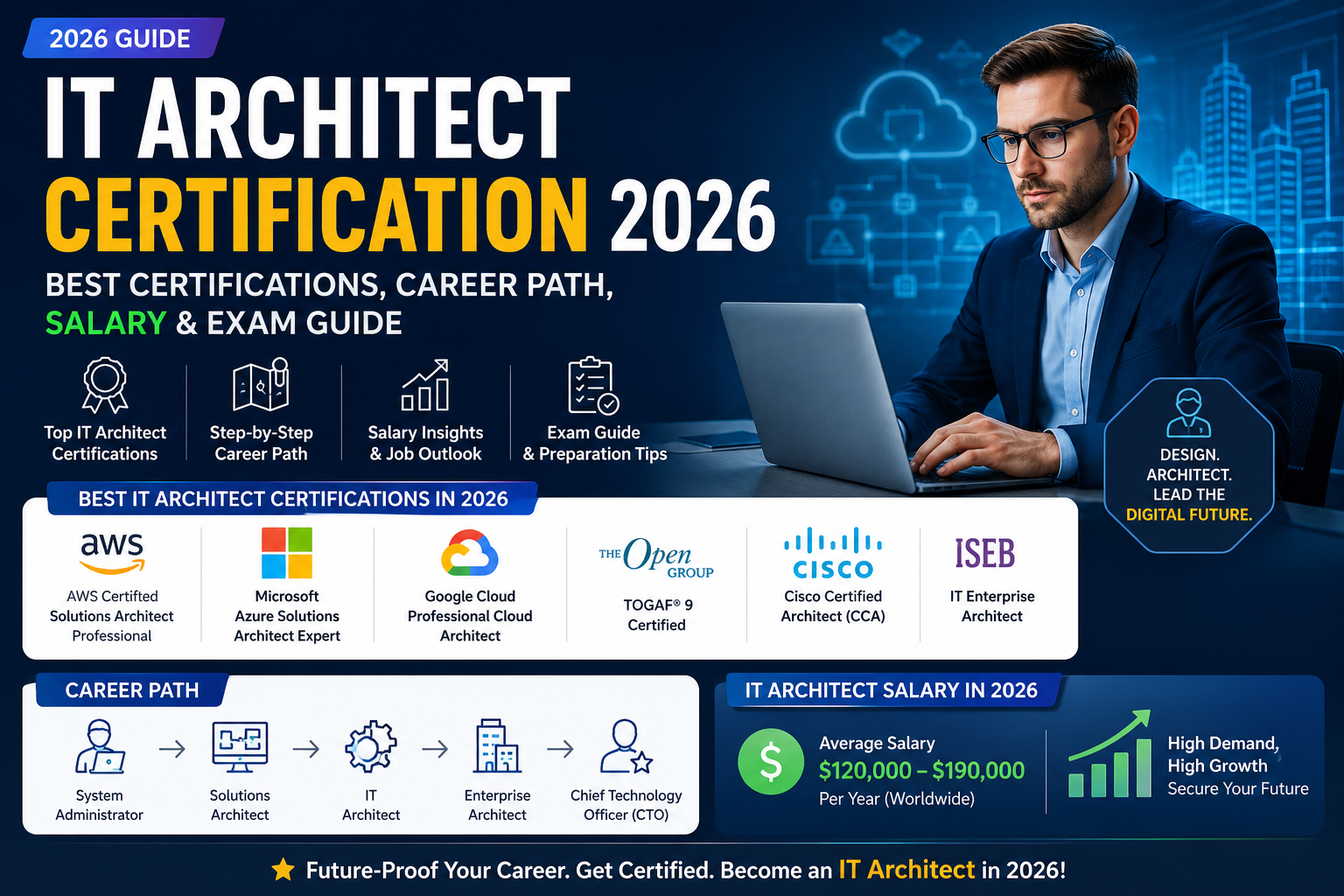
Enterprise technology is becoming increasingly complex as organizations adopt cloud computing, artificial intelligence, hybrid infrastructure, automation, cybersecurity, and modern application architectures. Behind these large-scale technology initiatives are IT architects who design solutions that are secure, scalable, reliable, and aligned with business objectives.
For experienced IT professionals looking to move into leadership roles, becoming a certified IT architect can be an important career milestone. Certifications validate architecture knowledge, demonstrate professional commitment, and help candidates develop structured expertise in solution design, enterprise architecture, and cloud technologies. While certification alone does not guarantee career advancement, it can strengthen your qualifications when combined with practical experience.
This guide explores the best IT architect certifications in 2026, outlines a recommended career path, discusses salary expectations, and provides practical preparation guidance.
What Does an IT Architect Do?
An IT architect designs technology solutions that support organizational goals while balancing performance, security, scalability, cost, and compliance.
Depending on the organization, architects may specialize in:
-
Enterprise Architecture
-
Solution Architecture
-
Cloud Architecture
-
Infrastructure Architecture
-
Security Architecture
-
Application Architecture
Rather than implementing individual technologies, architects focus on designing complete systems that integrate multiple platforms and support long-term business growth.
Explore this topic on the Cert Mage YouTube channel.
Best IT Architect Certifications in 2026
There is no single certification that defines every IT architect. Instead, professionals often combine architecture frameworks with vendor-specific cloud certifications.
|
Certification |
Best For |
Career Focus |
|
TOGAF Enterprise Architecture Foundation & Practitioner |
Enterprise Architects |
Enterprise Architecture |
|
Microsoft Azure Solutions Architect Expert (AZ-305) |
Azure Professionals |
Cloud Solution Architecture |
|
AWS Certified Solutions Architect – Professional |
AWS Architects |
Enterprise Cloud Architecture |
|
Google Cloud Professional Cloud Architect |
Google Cloud Professionals |
Cloud Architecture |
|
Microsoft Cybersecurity Architect Expert (SC-100) |
Security Architects |
Enterprise Security Architecture |
TOGAF remains one of the most recognized vendor-neutral enterprise architecture frameworks, while cloud architecture certifications from Microsoft, AWS, and Google Cloud continue supporting specialized solution architecture careers.
Building Your Career Path
Most professionals do not become architects immediately after entering IT.
A typical progression includes:
Stage 1 – Foundation
Develop skills in networking, operating systems, cloud fundamentals, virtualization, databases, and cybersecurity.
Stage 2 – Technical Specialization
Work as a systems administrator, cloud engineer, software developer, infrastructure engineer, or security engineer while gaining practical project experience.
Stage 3 – Senior Technical Roles
Take responsibility for designing infrastructure, supporting cloud migrations, leading technical projects, and mentoring junior engineers.
Stage 4 – Architecture
Earn architecture-focused certifications while expanding your understanding of enterprise design, governance, business strategy, and technology planning.
This gradual progression helps professionals develop both technical depth and architectural decision-making skills.
Skills Every Modern IT Architect Needs
The responsibilities of architects continue expanding as enterprise technology evolves.
Today's employers frequently expect architects to understand:
-
Cloud architecture
-
Enterprise architecture
-
Cybersecurity
-
Identity and access management
-
Networking
-
Infrastructure automation
-
DevOps practices
-
Artificial Intelligence
-
Business continuity
-
Governance and compliance
In addition to technical expertise, communication and leadership skills are becoming equally important because architects regularly collaborate with executives, project managers, developers, and business stakeholders.
Salary Expectations
One of the biggest motivations for pursuing architecture certifications is career advancement.
Salary varies according to several factors:
-
Professional experience
-
Geographic location
-
Industry
-
Employer
-
Technical specialization
-
Leadership responsibilities
-
Project experience
Architect roles often rank among the highest-paying technical positions because they require broad technical expertise alongside business planning and strategic decision-making.
Certification alone does not determine salary, but it can improve eligibility for senior architecture positions that typically offer higher compensation than operational IT roles.
Understanding the Certification Exams
Each architecture certification evaluates different competencies.
TOGAF examinations emphasize enterprise architecture methodology, governance, business alignment, and architectural frameworks.
Microsoft AZ-305 focuses on designing Azure infrastructure solutions, including identity, governance, storage, business continuity, and infrastructure architecture.
AWS Solutions Architect – Professional evaluates advanced enterprise cloud design, migration strategies, networking, governance, resilience, and cost optimization within AWS environments.
Google Cloud Professional Cloud Architect measures the ability to design secure, scalable, and business-focused cloud solutions using Google Cloud technologies.
Candidates should select certifications that align with their current technical environment and long-term career goals.
Preparing Successfully
Successful preparation involves much more than reading study guides.
Begin by reviewing the official exam objectives before creating a structured learning schedule. Combine theoretical study with practical experience by participating in cloud deployments, infrastructure modernization projects, enterprise application implementations, and architecture discussions.
Hands-on experience helps reinforce concepts while improving your ability to solve scenario-based exam questions.
Studying architecture principles alongside real project work generally produces much stronger long-term results than memorizing technical information alone.
Common Mistakes to Avoid
Many candidates attempt IT architecture certifications before developing sufficient technical experience.
Another common mistake is focusing exclusively on vendor technologies while overlooking business analysis, governance, communication, and enterprise architecture principles.
Architects design technology to solve business problems, so understanding organizational objectives is just as important as understanding cloud services or networking.
Developing broad technical experience before specializing usually creates a stronger architecture foundation.
Many professionals also strengthen their preparation using structured study resources and practice materials from Cert Mage alongside official certification resources and practical architecture projects.
Looking Ahead
The future of IT architecture will continue being shaped by cloud computing, artificial intelligence, cybersecurity, automation, hybrid infrastructure, and enterprise modernization.
Organizations increasingly expect architects to combine technical expertise with business leadership while designing systems that remain scalable, secure, and adaptable to future technological change.
Professionals who continue learning, update their certifications, and gain practical architecture experience across multiple technology domains are likely to remain highly valuable throughout their careers.
Conclusion
IT architect certifications continue to be a worthwhile investment for experienced technology professionals seeking leadership positions. Whether you pursue TOGAF, Microsoft Azure, AWS, Google Cloud, or cybersecurity architecture certifications, the greatest career value comes from combining certification with practical enterprise experience.
By building strong technical foundations, expanding cloud expertise, understanding enterprise architecture principles, and developing leadership skills, you can position yourself for long-term success as an IT architect in today's rapidly evolving technology landscape.
FAQs
Which IT architect certification is best for beginners?
Most architecture certifications target experienced professionals. Beginners should first build networking, cloud, security, and systems administration knowledge before pursuing architecture-focused credentials.
Is TOGAF still valuable in 2026?
Yes. TOGAF remains one of the world's most recognized enterprise architecture frameworks and continues supporting professionals working in enterprise architecture and digital transformation.
Which cloud certification is best for IT architects?
Microsoft Azure Solutions Architect Expert, AWS Certified Solutions Architect – Professional, and Google Cloud Professional Cloud Architect are all respected choices depending on your organization's cloud platform.
Can certification alone help me become an IT architect?
No. Certification strengthens your qualifications, but employers typically expect practical experience designing enterprise systems, cloud infrastructure, and technology solutions before moving into architecture roles.
Is an IT architect career worth pursuing in 2026?
Yes. Organizations continue investing in cloud computing, cybersecurity, enterprise modernization, and artificial intelligence, creating sustained demand for experienced IT architects capable of leading complex technology initiatives.
Learn More: https://blogg-booster.com/dp-100-vs-ai-300-which-microsoft-ai-certification-should-you-choose-in-2026/

 English
 Arabic
 French
 Spanish
 Portuguese
 Deutsch
 Turkish
 Italiano
 Russian
 Romaian
 Portuguese (Brazil)
 Greek
Greek