

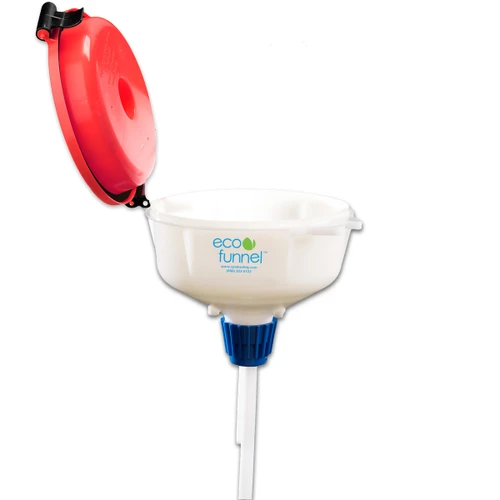
The Backbone of Sterile Science: The Complete Guide to Autoclavable, Heat-Resistant Laboratory Funnels
In the modern laboratory, the success of an entire research project often hinges on the smallest, most routine tasks. Transferring a liquid growth medium into a sterile flask, pouring a hot chemical solvent into a separation apparatus, or measuring out reactive powders are actions performed thousands of times a day across the globe. Yet, if the tool used to facilitate these transfers introduces even a single microscopic contaminant or undergoes a subtle chemical breakdown, weeks of meticulous research can be instantly ruined.
This is why specialized laboratory funnels are not merely basic plastic or glass shapes; they are precision-engineered instruments designed to withstand the harshest environments. For facilities that demand absolute purity, strict contamination control, and equipment longevity, investing in high-quality autoclavable funnels is a fundamental requirement.
The Danger of Standard Lab Equipment
To understand the necessity of specialized lab funnels, one must look at the limitations of standard consumer-grade or low-cost commercial plastics. Budget funnels are typically constructed from low-density plastics that feature low melting points and poor chemical resistance.
When these low-grade materials are exposed to aggressive organic solvents, they can leach plasticizers and unreacted monomers directly into your solutions, altering analytical chemistry results. Furthermore, trying to sterilize a standard plastic funnel is impossible; the intense environment of a laboratory autoclave will cause it to warp, melt, crack, or release toxic fumes.
Defining the Golden Standard: Sterilization and Thermal Resistance
To maintain a sterile workspace—whether in a clinical setting, a pharmaceutical development lab, or a microbiology research facility—equipment must routinely undergo a sterilization process. The most reliable and widely accepted method is steam sterilization via an autoclave.
An autoclave subjects equipment to high-pressure steam, typically reaching temperatures of $121^\circ\text{C}$ ($250^\circ\text{F}$) at a pressure of 15 psi for a duration of 15 to 30 minutes. This extreme environment effectively kills all forms of microbial life, including bacteria, viruses, fungi, and highly resilient bacterial spores.
Consequently, a facility requires sterilizable funnels that are inherently heat-resistant funnels. They must feature a molecular structure that remains completely stable under intense thermal and physical pressure, ensuring that the funnel maintains its exact shape, dimensions, and structural integrity cycle after cycle.
Material Science: Choosing the Right Funnel
When procuring laboratory funnels capable of enduring repeated autoclave cycles, lab managers and procurement officers generally choose between two primary classes of materials, each offering distinct advantages based on the specific application.
1. Advanced Polypropylene (PP) and Polymethylpentene (PMP)
For high-traffic labs, undergraduate university classrooms, and fast-paced industrial environments, heavy-duty plastic autoclavable funnels are highly popular.
-
Thermal Capability: Polypropylene can safely withstand temperatures up to approximately $135^\circ\text{C}$, making it perfectly suited for standard autoclave cycles.
-
Durability: These funnels are virtually shatterproof. If a technician drops a polypropylene funnel onto a concrete lab floor, it will not break, significantly reducing replacement costs and preventing injuries from broken shards.
-
Design Flexibility: Molded plastics allow for external ribbing, which prevents airlocks and accelerates liquid filtration rates.
2. Borosilicate Glass
For high-purity analytical chemistry, pharmaceutical manufacturing, and applications involving aggressive acids or organic solvents, borosilicate glass remains the definitive choice.
-
Thermal Shock Resistance: Borosilicate glass has a incredibly low coefficient of thermal expansion. This means it can handle extreme, rapid temperature swings without cracking or shattering.
-
Chemical Inertness: Glass does not leach, absorb, or react with chemicals. It provides a completely neutral surface for transferring sensitive compounds.
-
Visual Clarity: The crystal-clear transparency allows laboratory technicians to visually monitor fluid flow and easily identify any lingering residue or contamination during the cleaning process.
Critical Applications Across Scientific Disciplines
The implementation of premium, sterilizable funnels is a core operational requirement across several critical scientific sectors:
Microbiology and Virology
When preparing agar plates, nutrient broths, or liquid cell culture media, absolute sterility is mandatory. Introducing a single foreign bacterium or fungal spore via an unsterilized funnel can compromise an entire batch of media, leading to false positives or completely derailed experiments.
Pharmaceutical Development
In drug compounding and formulation, cross-contamination between different batches of active pharmaceutical ingredients (APIs) can have devastating legal and medical consequences. Utilizing heavy-duty heat-resistant funnels ensures that the tools can be aggressively cleaned, autoclaved, and verified free of chemical or biological residues between batches.
Analytical and Organic Chemistry
Chemists frequently work with hot, boiling solutions or highly volatile solvents like acetone, chloroform, and concentrated acids. A standard funnel would dissolve or warp under these conditions. Using heat-resistant borosilicate glass funnels guarantees that the apparatus will remain completely stable throughout the pouring and filtration process.
Key Features to Consider When Procurement Shopping
When selecting the ideal lab funnels for your facility, keep the following specifications in mind:
| Feature Specification | Polypropylene (Plastic) | Borosilicate (Glass) |
| Autoclave Compatibility | Excellent (Up to $135^\circ\text{C}$) | Universal (Over $400^\circ\text{C}$) |
| Shatter Resistance | High (Ideal for busy labs) | Low (Requires careful handling) |
| Chemical Compatibility | Great for general acids/bases | Exceptional (Universal inertness) |
| Cost Efficiency | Highly economical | Higher initial investment |
| Primary Use-Case | Biology, classrooms, high-volume transfer | Analytics, hot solvents, ultra-pure testing |
Conclusion: Protecting the Integrity of Your Science
In the grand scheme of laboratory budgeting, purchasing high-quality laboratory funnels represents a relatively minor financial investment. However, the operational impact of that choice is immense. By deliberately choosing autoclavable funnels that possess verified heat-resistant and chemical-resistant properties, you are actively protecting your facility from the hidden costs of experiment failures, chemical contamination, and frequent equipment replacements.
Equip your laboratory with tools designed to handle the pressure of modern science, and ensure that every liquid transfer you perform is safe, efficient, and completely sterile.


