


Introduction
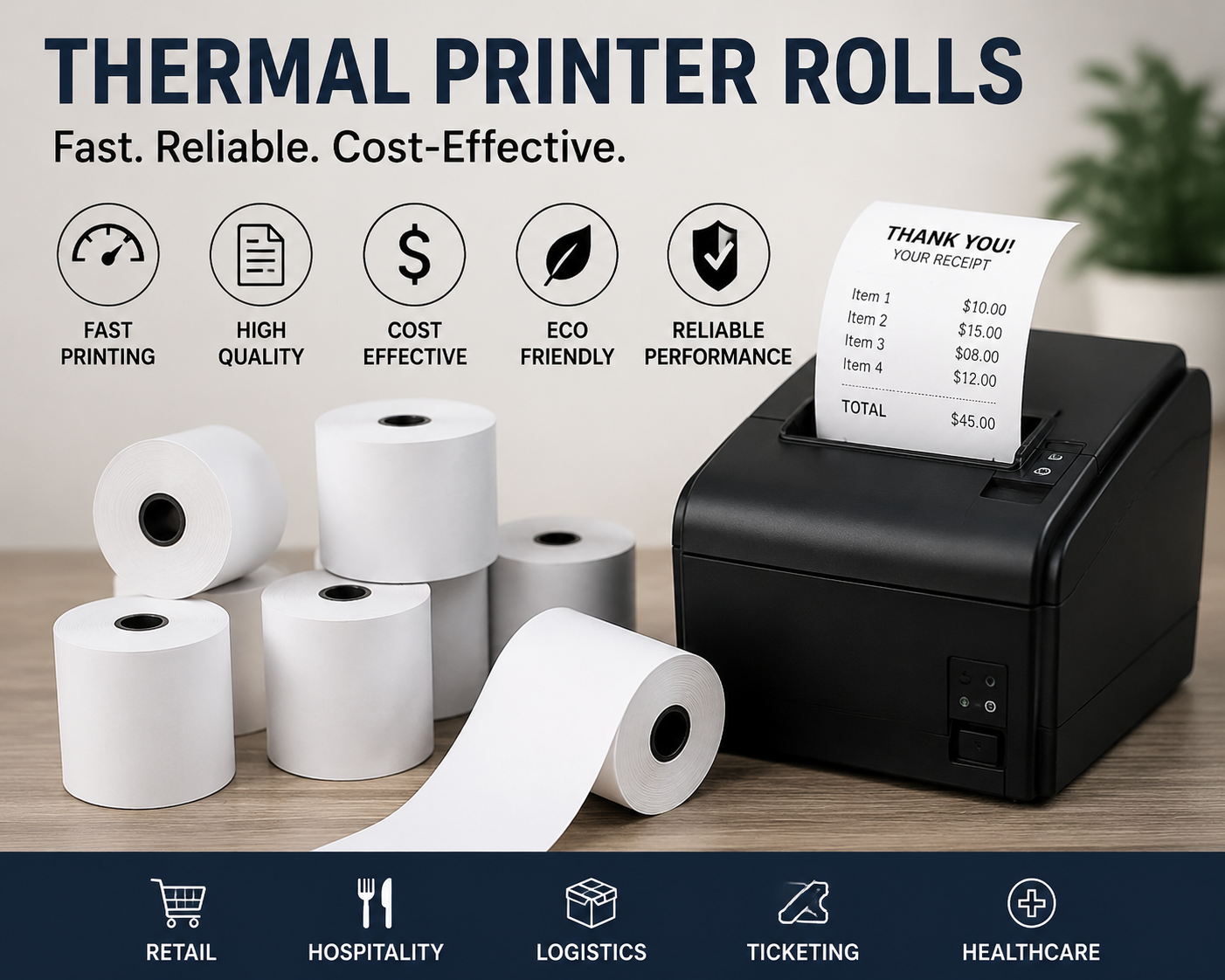
A thermal printer roll is one of the most important supplies used in modern businesses. Thermal printer rolls are essential for daily operations in retail stores, supermarkets, restaurants, pharmacies, logistics companies, and banks. They help businesses print receipts, invoices, shipping labels, tickets, and transaction records quickly and efficiently.
As businesses continue to focus on speed and cost savings, thermal printing technology has become increasingly popular. Unlike traditional printing methods, thermal printers do not require ink or toner. Instead, they use heat-sensitive paper that reacts when exposed to the printer's thermal print head.
Choosing the right thermal printer roll can improve print quality, reduce operational costs, and ensure smooth business operations. This guide covers everything you need to know about thermal printer rolls, including their benefits, types, applications, storage methods, and purchasing considerations.
What Is a Thermal Printer Roll?
A thermal printer roll is a specially coated paper roll designed for use in thermal printers. The paper contains a heat-sensitive layer that changes color when exposed to heat.
When the thermal printer's print head applies heat to the paper, text, numbers, barcodes, and graphics appear without requiring ink cartridges or ribbons.
How Thermal Printing Works
The printing process is simple and efficient:
-
The printer receives print data.
-
The thermal print head heats specific areas.
-
The paper coating reacts to heat.
-
Images and text appear instantly.
This technology allows businesses to print quickly while reducing maintenance requirements.
Why Thermal Printer Rolls Are So Popular
Businesses across many industries prefer thermal printer rolls because they provide reliable and cost-effective printing solutions.
Key Benefits of Thermal Printer Rolls
-
No ink or toner required
-
Fast printing speeds
-
Clear print quality
-
Lower maintenance costs
-
Easy installation
-
Quiet operation
-
High reliability
These advantages make thermal printing ideal for high-volume environments.
Types of Thermal Printer Rolls
Thermal printer rolls come in different varieties. Understanding the available options helps businesses choose the most suitable product.
Direct Thermal Rolls
Direct thermal rolls are the most commonly used type.
Features
-
Heat-sensitive coating
-
No ribbon required
-
Cost-effective operation
-
Ideal for short-term documents
Common Applications
-
Retail receipts
-
Parking tickets
-
Queue tickets
-
Shipping labels
Thermal Transfer Rolls
Thermal transfer printing uses ribbons to transfer ink onto paper.
Benefits
-
Longer-lasting prints
-
Better resistance to fading
-
Durable labeling
-
Suitable for industrial applications
Common Applications
-
Asset tracking
-
Warehouse labels
-
Product identification
-
Long-term storage labels
Common Uses of Thermal Printer Rolls
Thermal printer rolls are used in many industries because of their efficiency and reliability.
Retail Stores
Retail businesses rely heavily on thermal printer rolls for receipts and transaction records.
Benefits
-
Fast checkout processing
-
Clear receipt printing
-
Reduced printer maintenance
Restaurants and Cafes
Restaurants use thermal printing for:
-
Customer receipts
-
Kitchen orders
-
Delivery tickets
The speed of thermal printing helps improve service efficiency.
Healthcare Facilities
Hospitals and clinics use thermal printer rolls for:
-
Patient records
-
Prescription labels
-
Appointment slips
Accurate printing supports smooth healthcare operations.
Logistics and Shipping
Shipping companies use thermal printing for:
-
Package labels
-
Tracking barcodes
-
Delivery receipts
Clear barcode printing improves tracking accuracy.
Banking and Financial Services
Banks often print:
-
ATM receipts
-
Transaction records
-
Customer confirmations
Thermal printer rolls ensure reliable document generation.
Advantages of Using Thermal Printer Rolls
Cost Savings
One major advantage is reduced operating costs.
Businesses save money because:
-
No ink cartridges are needed
-
Fewer printer parts require replacement
-
Maintenance expenses are lower
Faster Printing
Thermal printers operate at high speeds.
This is particularly beneficial for:
-
Retail checkout counters
-
High-volume transactions
-
Busy service environments
Better Reliability
Thermal printers contain fewer moving parts than many traditional printers.
This often results in:
-
Fewer breakdowns
-
Less downtime
-
Improved productivity
Excellent Print Quality
Modern thermal printer rolls produce:
-
Sharp text
-
Clear barcodes
-
Easy-to-read receipts
High-quality printing supports professional business operations.
How to Pick the Best Paper for a Thermal Printer
Selecting the correct thermal printer roll is important for achieving optimal results.
Consider Roll Size
Different printers require specific roll dimensions.
Common considerations include:
-
Roll width
-
Roll diameter
-
Core size
Always check printer specifications before purchasing.
Evaluate Paper Quality
Higher-quality thermal paper generally offers:
-
Better image clarity
-
Longer-lasting prints
-
Improved durability
Investing in quality paper often reduces operational issues.
Consider Print Longevity
Some receipts need to remain readable for extended periods.
Businesses should evaluate:
-
Storage conditions
-
Required lifespan
-
Environmental exposure
Different thermal papers offer varying levels of durability.
Match Industry Requirements
Different industries have different needs.
For example:
-
Retail focuses on receipt quality.
-
Logistics prioritizes barcode readability.
-
Healthcare values accurate labeling.
Choosing the right roll helps improve performance.
A Black Copper Printer delivers fast, reliable, and high-quality printing, making it an excellent choice for retail stores, restaurants, and business operations.
Proper Storage of Thermal Printer Rolls
Storage conditions significantly affect thermal paper quality.
Avoid Heat Exposure
Excessive heat can activate thermal paper prematurely.
Store rolls away from:
-
Heaters
-
Direct sunlight
-
High-temperature environments
Protect From Moisture
Humidity can damage thermal coatings.
Store rolls in:
-
Dry environments
-
Sealed packaging
-
Controlled storage areas
Prevent Physical Damage
Avoid crushing or bending rolls during storage.
Damaged rolls may cause:
-
Printing issues
-
Paper jams
-
Reduced print quality
Signs You Need Better Thermal Printer Rolls
Poor-quality thermal paper can create problems.
Faded Printing
Receipts become difficult to read over time.
Uneven Print Quality
Text appears inconsistent or incomplete.
Frequent Paper Jams
Low-quality rolls may not feed properly.
Short Receipt Lifespan
Print fades quickly after printing.
Switching to higher-quality thermal printer rolls often solves these issues.
Environmental Considerations
Many businesses are becoming more environmentally conscious.
Some thermal paper products are designed to support sustainability goals.
Potential benefits include:
-
Reduced waste
-
Efficient printing
-
Lower resource consumption
Businesses can explore environmentally responsible paper options when available.
Future Trends in Thermal Printing Technology
Thermal printing continues to evolve as businesses seek better efficiency and reliability.
Emerging developments include:
-
Enhanced paper coatings
-
Improved print durability
-
Faster printer speeds
-
Better barcode performance
-
More efficient printing systems
These innovations will help businesses improve productivity and reduce costs.
Frequently Asked Questions
What Is a Thermal Printer Roll?
A thermal printer roll is a heat-sensitive paper roll used in thermal printers to create printed text and images without ink or toner.
How Long Do Thermal Printer Rolls Last?
Unprinted rolls can last for several years when stored properly. Printed receipts may remain readable for extended periods depending on paper quality and storage conditions.
Do Thermal Printers Need Ink?
No. Direct thermal printers use heat-sensitive paper and do not require ink cartridges or toner.
Why Are Thermal Printer Rolls Popular?
They offer fast printing, low maintenance, excellent print quality, and lower operating costs compared to many traditional printing methods.
How Do I Choose the Right Thermal Printer Roll?
Consider roll size, paper quality, printer compatibility, and the intended application before making a purchase.
Key Takeaways
A thermal printer roll is an essential business supply that supports fast, reliable, and cost-effective printing. Whether used in retail, healthcare, logistics, banking, or hospitality, thermal printer rolls help businesses improve efficiency and maintain smooth operations. By selecting the correct roll size, choosing quality paper, and storing rolls properly, businesses can maximize printer performance and reduce long-term costs. As thermal printing technology continues to advance, thermal printer rolls will remain a valuable solution for organizations seeking dependable and professional printing results.Explore more printing solutions and business tools designed to improve efficiency, accuracy, and daily operations.


