


Solar Panel Cleaning in Gulberg With Long Extension Poles
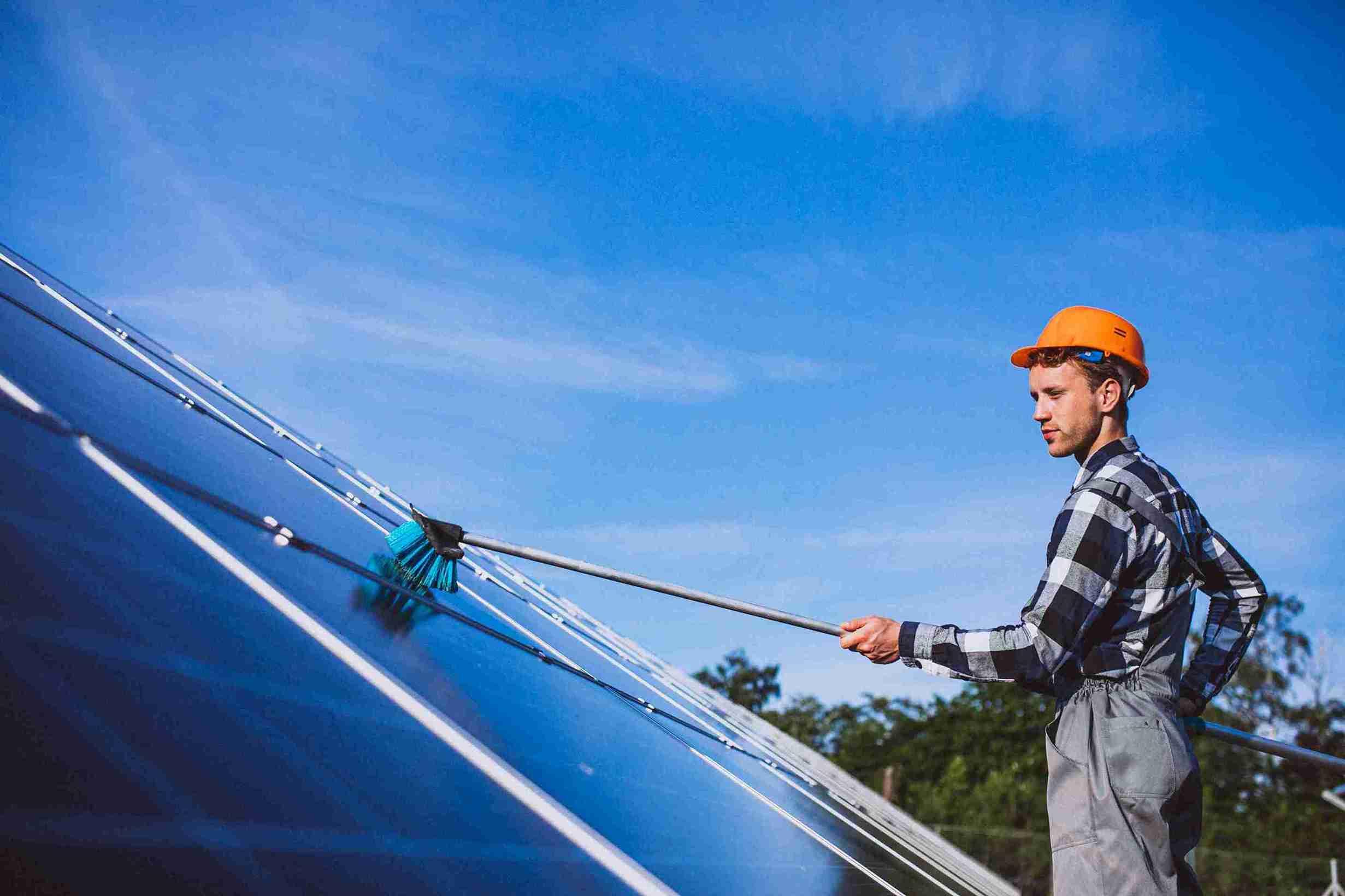
Cleaning solar panels with a long extension pole solves a very ordinary Gulberg problem: the panels sit above a boundary wall, over a car porch, or on a roof edge that nobody should reach by climbing. Solar panel cleaning in Gulberg is safer and more effective when the cleaning method matches the height, panel angle, water quality, and access around the property.
The point is not to scrub glass harder. It is to remove dust, soot, bird droppings, and sticky city grime without scratching the surface, forcing dirty water under the frame, or taking needless risks on a roof. A long extension setup can do that well, but only with the right brush, water flow, and technique.
What cleaning with a long extension pole actually means
Cleaning solar panels with a long extension pole is a controlled method that uses a telescopic pole, a soft brush head, and a water feed to wash reachable panels from the ground, a terrace, or a stable roof walkway. It is most useful for low-rise homes, offices, shops, schools, and commercial buildings where the operator can work from a safe position instead of stepping on the array.
The pole is not a magic wand. Its real job is to keep the operator at a safe distance while allowing the brush to travel across the panel in a straight, gentle pattern. A good setup keeps pressure light, sends water ahead of the brush, and reaches the upper edge without dragging grit across dry glass.
For many Gulberg properties, a pole in the 4 to 8 metre range is practical for arrays above porches, terraces, first-floor roofs, or boundary-facing elevations. Higher installations need a site-specific access plan because an extra metre of reach also creates more flex, less control, and more fatigue. Solar panel cleaning in Gulberg should never become a balancing act on a ladder simply because the last corner looks close.
The equipment matters more than brute force
A safe long-pole clean depends on soft contact, clean water, and stable footing. Hard bristles, abrasive pads, metal scrapers, and high-pressure jets are poor choices because they can score the glass, damage seals, or push water where it does not belong.
Use a lightweight telescopic pole with a broad, soft-bristle brush head. The brush should stay wet throughout the pass, and the hose should be managed so it does not pull against the pole or snag on a panel frame. A small flow-control valve near the handle makes the work less messy and stops water from running everywhere between sections.
Some homeowners look for a solar panel cleaning machine because it sounds faster. A machine can be useful on a large, repetitive commercial layout, but it does not replace judgement. On a Gulberg rooftop with uneven access, parked cars below, overhead cables, and different panel angles, a trained operator using a long pole often has better control than a bulky machine.
Water quality is the other half of the job. Ordinary tap water may leave mineral spots as it dries, especially after a hot afternoon. Low-mineral or filtered water reduces residue and lets the glass dry more evenly. That is not cosmetic fussiness; dried marks can hold fresh dust and make the next cleaning harder.
A practical step-by-step method for long-pole cleaning
The safest method is simple: inspect first, wet the surface, loosen dirt gently, rinse completely, and check the finish from more than one angle. Rushing any step creates streaks, missed corners, or unnecessary force on the panels.
Start by looking for cracked glass, loose cables, lifted frames, nesting material, or panels that are too high to reach with steady control. Do not clean a damaged panel until its condition is assessed. Next, work early in the morning or later in the afternoon, when the glass is cooler and water is less likely to flash-dry before it can rinse away dirt.
Wet one manageable section at a time. Let the water soften dust and bird droppings for a minute, then move the brush in overlapping horizontal strokes from the upper edge down. Keep the brush flat rather than digging its outer edge into the frame. Rinse the same section until the runoff looks clear, then inspect it from the side because marks that vanish from one angle can still show in direct light.
A dependable solar panel washing service follows this sequence instead of treating every job like a fast hose-down. For homes with two or three small strings, the work may take less than an hour; larger commercial roofs need a slower route plan so hoses, drains, skylights, and electrical pathways stay clear.
Solar panel cleaning in Gulberg works best when the operator cleans in zones rather than sweeping randomly across the whole roof. Divide the array by row or by inverter string, finish one zone fully, and then move on. That makes missed panels obvious and prevents the same dirty water from being dragged across glass twice.
Why Gulberg conditions change the cleaning schedule
Gulberg has a mix of dense roads, construction activity, mature trees, traffic dust, and compact rooftops. That combination means panel dirt is rarely just a light layer of dry dust. Near Main Boulevard, MM Alam Road, Liberty Market, or construction-heavy side streets, fine grit can settle quickly. In streets with large trees, bird droppings and leaf debris may matter more than road dust.
For a typical residential system, a visual check every two to four weeks is sensible. A full clean is often needed when you can see a visible film, patchy marks, or debris collecting along the lower frame. Do not set the schedule by a calendar alone. A building beside an active construction site may need attention far sooner than a quieter house several streets away.
Rain does not always solve the problem. Light rain can turn dust into a thin muddy layer, while heavier rain may leave residue where runoff slows near the bottom edge. That is why a solar cleaning company in Gulberg should assess the panel condition before deciding whether a rinse, a full wash, or no work is needed. At AfinitySolar, the practical focus is on visible soiling, safe access, and clear water flow rather than pretending every roof needs the same routine.
Common mistakes that make panels look clean but perform poorly
The most common mistake is cleaning on hot glass with too little water. The surface may look bright for a moment, yet dried minerals and loosened grime can leave behind a hazy film. Another mistake is using dish soap or household cleaners; they may leave residue that attracts dust and creates streaks.
Avoid standing or kneeling on panels. Solar modules are designed to handle weather, not careless point loads from footwear, tools, or a person shifting weight. Also avoid pulling a long pole sideways across a panel at full extension. Side pressure is harder to control and can rub grit along the surface.
The phrase clean and green services should mean more than a nice slogan. Responsible solar cleaning uses modest water, avoids harsh chemicals, protects drainage routes, and keeps dirty runoff away from entrances, cars, and landscaped areas. On compact Gulberg plots, that detail matters because a careless rinse can dump dirty water straight onto a driveway or neighbouring wall.
Stop and reassess when the pole feels unstable, the roof surface is wet or slippery, wind is affecting brush control, or the panel edge cannot be reached without leaning. The last ten percent of a difficult panel is never worth a fall, a cracked module, or a damaged cable.
Final thoughts
A long extension pole is a practical tool for accessible solar arrays, not a shortcut for unsafe access. Solar panel cleaning in Gulberg becomes cleaner, safer, and more consistent when the brush stays soft, the water stays clean, and the operator works in controlled sections.
The useful standard is simple: no dry scrubbing, no harsh chemicals, no walking on panels, and no reaching beyond stable control. Follow that, and the result is not merely shinier glass; it is a cleaning routine that respects the system sitting on your roof.
Frequently Asked Questions
Can a long extension pole safely clean second-floor solar panels?
Yes, but only when the panels can be reached while the operator stands on stable ground, a secure terrace, or a safe roof walkway. If the pole bends heavily, the brush cannot stay flat, or the operator must lean over an edge, the setup is no longer safe.
Should I use tap water to wash solar panels in Gulberg?
Tap water can remove loose dirt, but it may leave mineral spots after drying, especially in warm weather. Filtered or low-mineral water gives a cleaner finish and reduces the chance of dried residue building up on the glass.
How often should solar panels be cleaned near Gulberg’s busy roads?
Check them every two to four weeks and clean when visible dust, soot, bird droppings, or muddy rain marks appear. Homes near heavy traffic, construction, or large trees usually need more frequent attention than quieter streets.
Can rain clean solar panels without manual washing?
Heavy rain may rinse loose dust, but it often cannot remove bird droppings, sticky grime, or residue trapped along the lower frame. Light rain can make the panel look worse by turning dry dust into a thin film.
Is it safe to use a pressure washer on solar panels?
A pressure washer is usually the wrong tool for solar panels because forceful water can affect seals, frame edges, and nearby electrical components. A soft brush with controlled water flow is slower but gives better control and a lower risk of damage.

 English
 French
 Spanish
 Portuguese
 Deutsch
 Turkish
 Dutch
Dutch
 Italiano
 Russian
 Romaian
 Portuguese (Brazil)
 Greek
Greek